What did the Romans ever do for us?
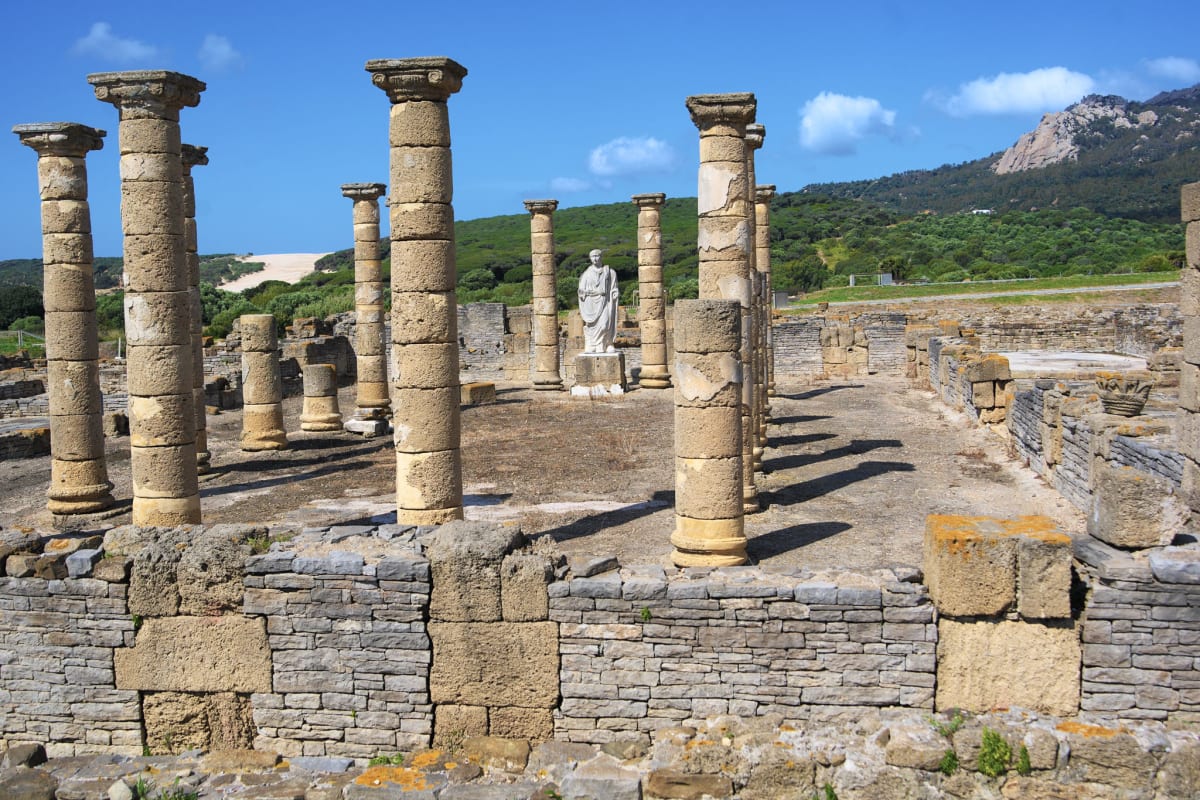
Baelo Claudia is one of the most complete and fascinating Roman sites in the Iberian Peninsula, offering a unique glimpse into ancient urban life. One of the best things though is its unique setting. The ruins sit right on the beautiful, golden sand of Playa de Bolonia. I had not heard of it until a few weeks before our visit and it’s still relatively unknown for such a marvellous historical and archeological site. To be honest, I was blown away by what I saw.
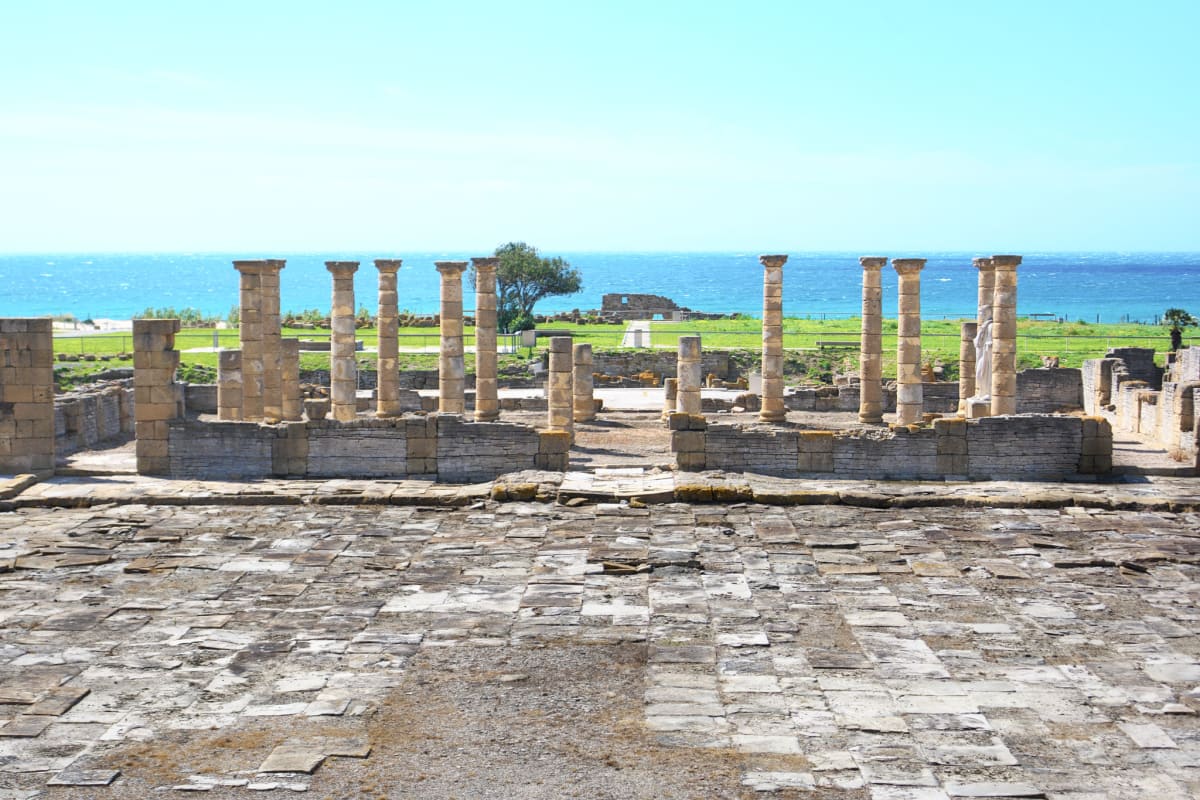 On my way to the Forum
The “City of Fish Sauce”
Baelo Claudia wasn’t built on gold or conquest, but on fish. Its entire economy was powered by the sea, specifically the almadraba (a traditional tuna fishing system) . This made the town the ancient world’s equivalent of a bustling industrial port.
It was the capital of Garum: The city was the premier producer of garum, a pungent, umami-rich fermented fish sauce made from tuna entrails and salt . It was the ketchup of the Roman Empire, used on everything and highly prized as a delicacy.
You can walk through the city’s well-preserved industrial district, featuring large salting vats (cetariae) where the tuna was processed before being shipped across the Mediterranean.
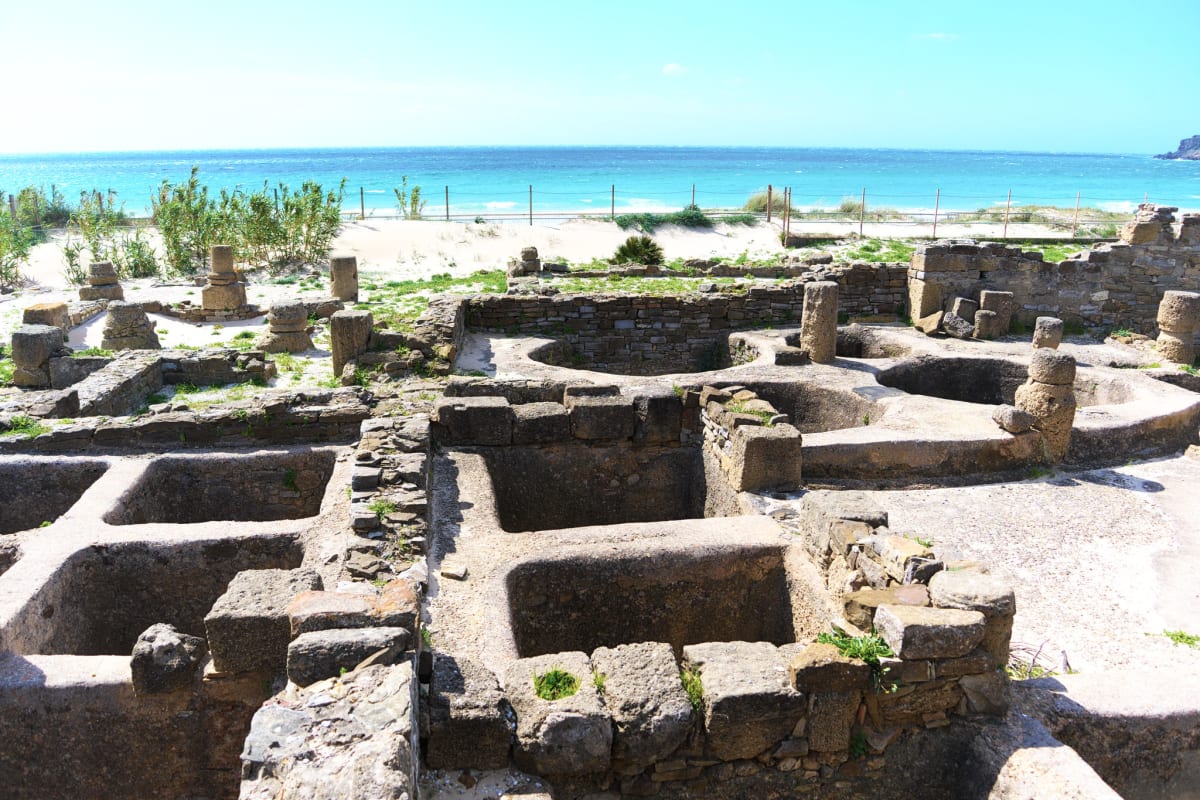 The salt curing
factories.
The salt curing
factories.
A Unique Triple Temple
Baelo Claudia boasts a religious layout so rare it has only one other parallel, found in Sbeitla, Tunisia.
The Capitoline Triad: The city’s forum is dominated by three perfectly aligned temples, each dedicated to the three most important gods in the Roman state religion: Jupiter (king of the gods), Juno (queen of the gods), and Minerva (goddess of wisdom).
A Touch of Egypt: Adding to its unique spiritual landscape, the city also features a well-preserved temple dedicated to the Egyptian goddess Isis, highlighting the cultural exchange across the Strait of Gibraltar.
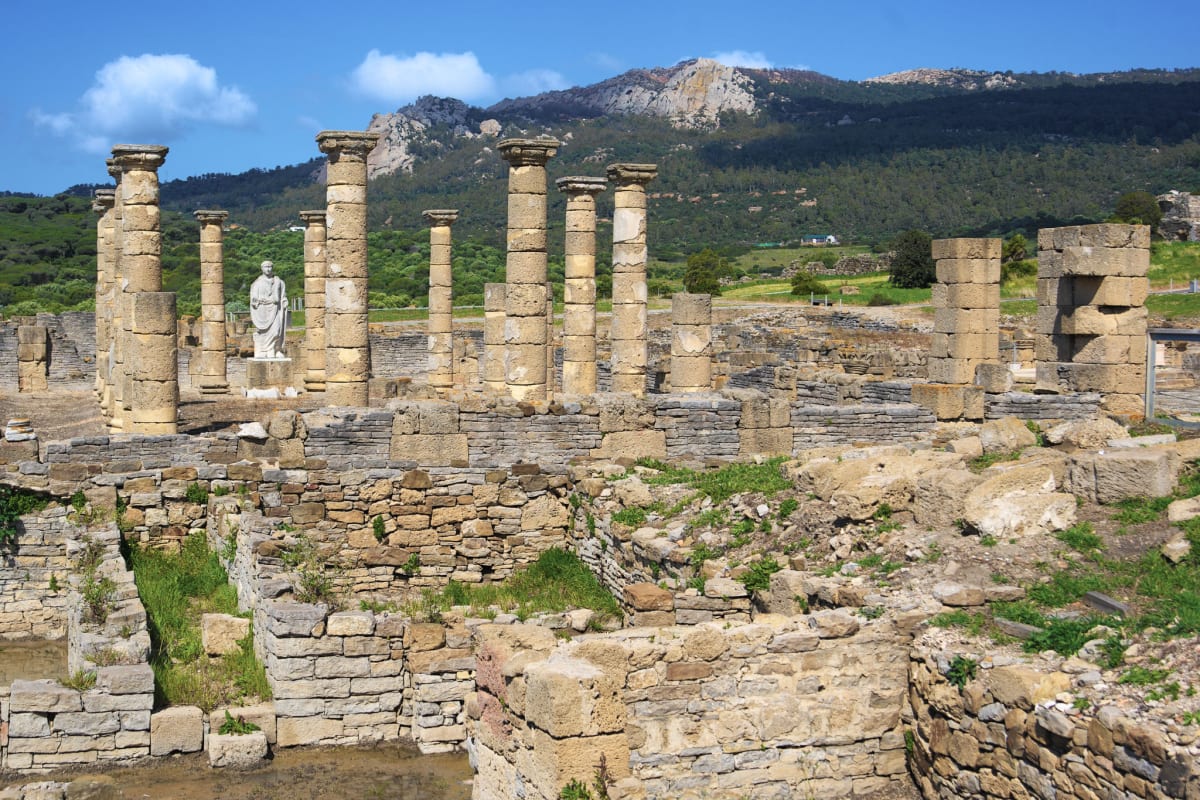 The Basilica and
Statue of Emperor Trajan
The Basilica and
Statue of Emperor Trajan
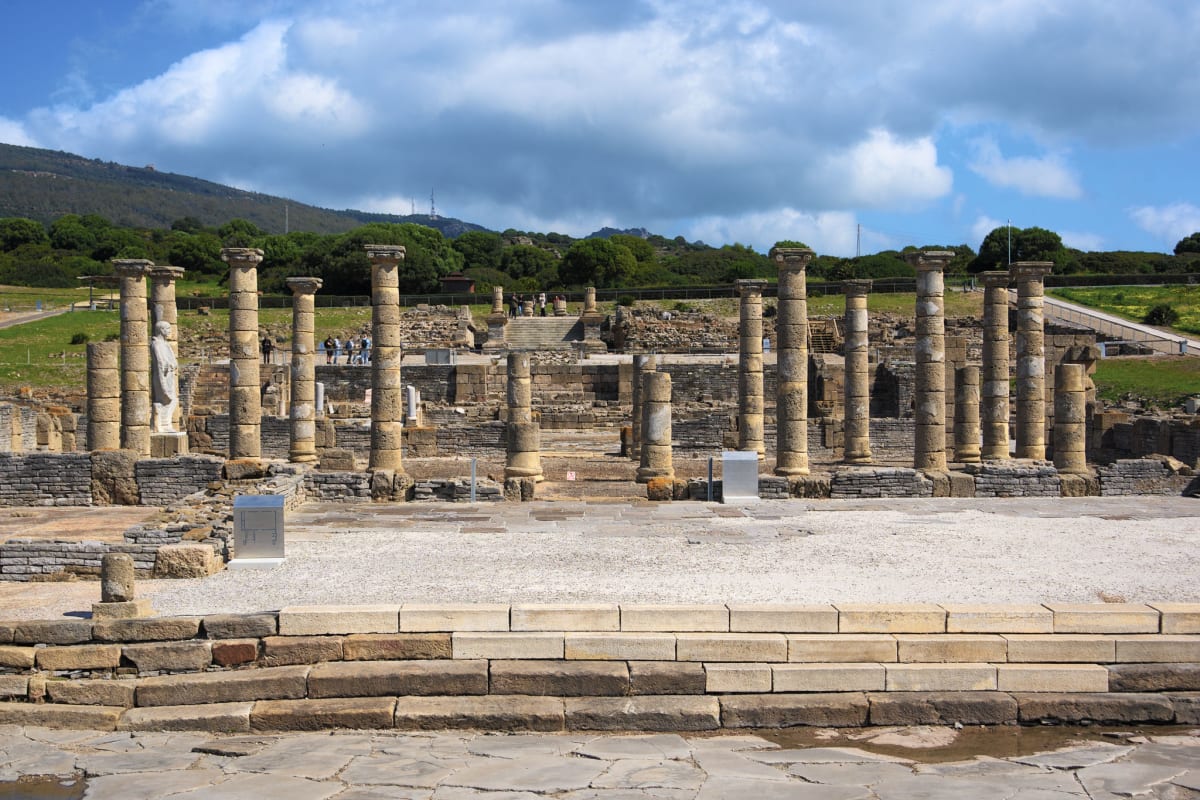 The Basilica from the
southern square
The Basilica from the
southern square
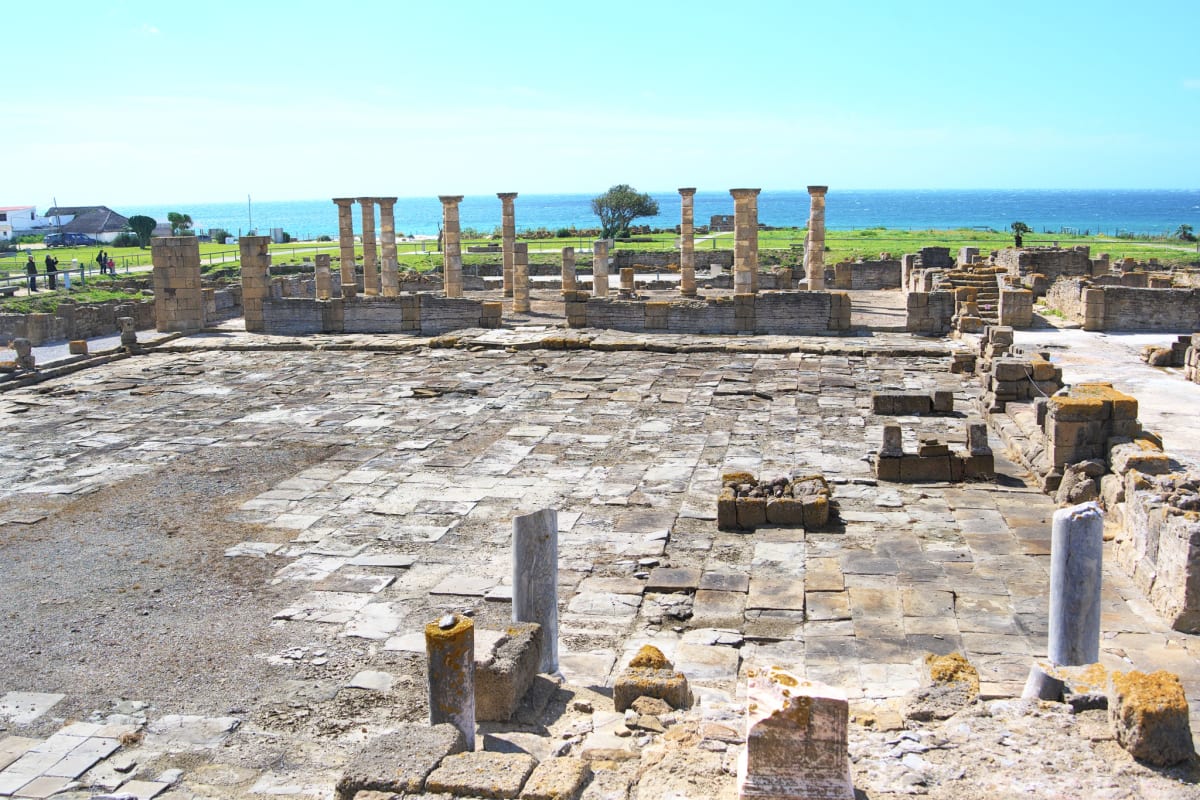 The Square of the
Forum and Basilica
The Square of the
Forum and Basilica
An Architectural Gem
Despite its small size, Baelo Claudia had all the grand public buildings expected of a prosperous Roman municipality.
A Theater with a View: The largest building in the city is its theater, which could hold up to 2,000 spectators, a significant portion of the population . It is built into a hillside and offers spectacular views of the sea and the Moroccan coast.
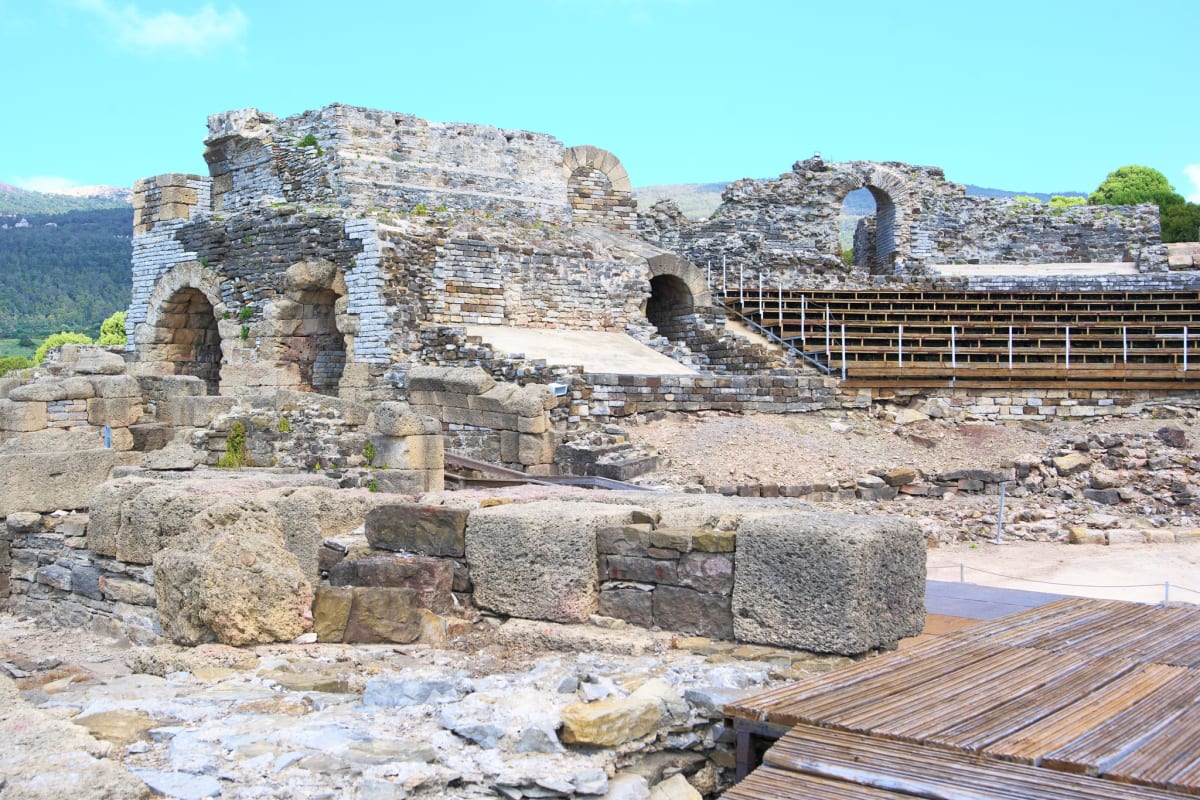 The westerly half of the
Theatre
The westerly half of the
Theatre
A Symbol of Imperial Favor: The city was granted the privileged status of municipium (Roman municipality) by Emperor Claudius, which is how it got the “Claudia” part of its name. In the basilica (the hall of justice), archaeologists found a massive, three-meter-tall statue of the Emperor Trajan.
The city’s history is a dramatic tale of prosperity, natural disaster, and eventual rebirth.
Destroyed by a Tsunami: The city’s decline began in the mid-2nd century AD, not just by invading pirates, but by a devastating earthquake and a subsequent tsunami that ravaged its buildings.
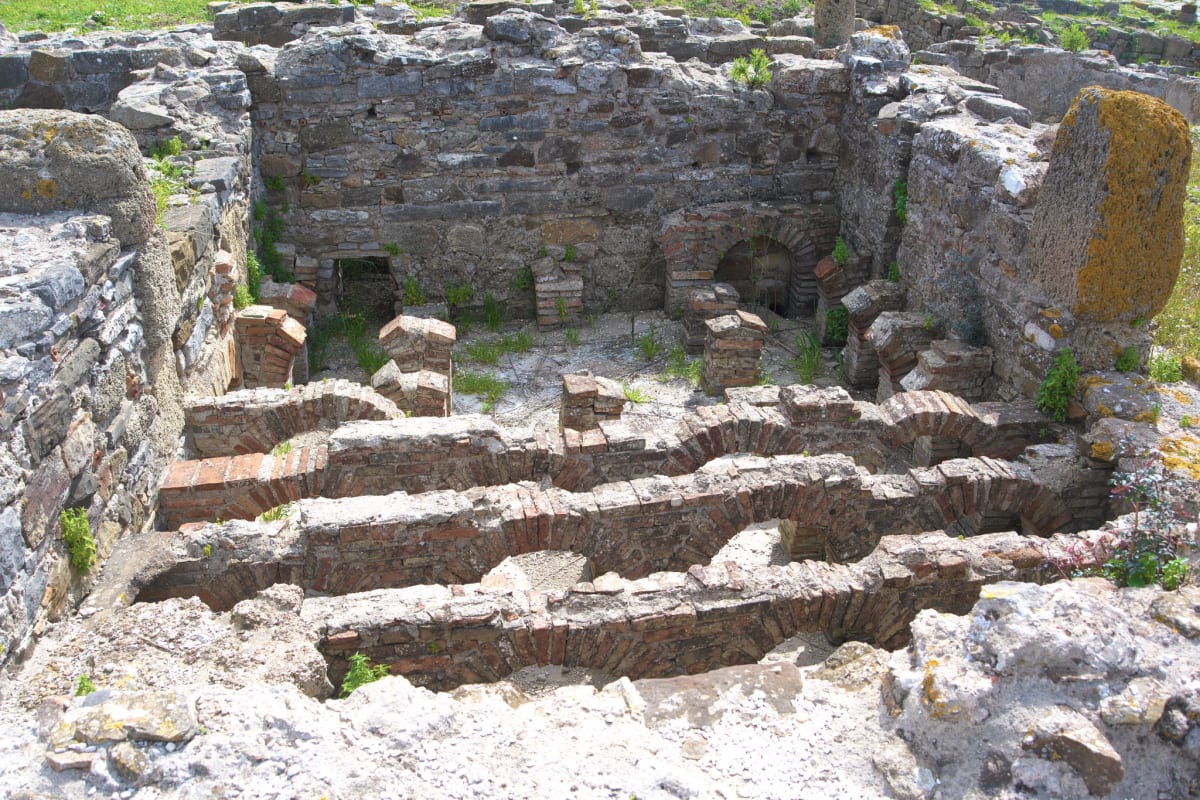 Municipal market area
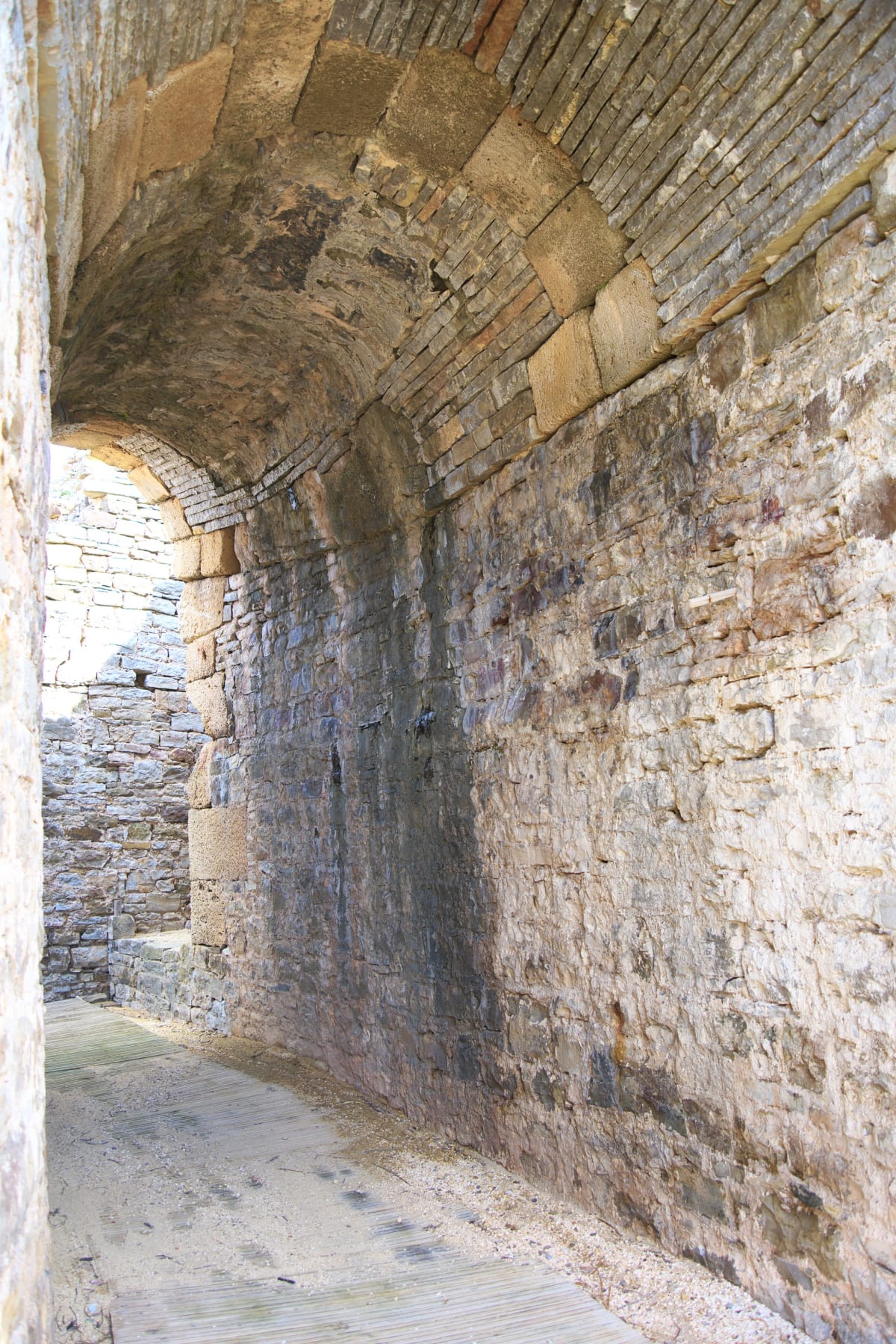 An arch near the shopping
area
An arch near the shopping
area